7 Heart Tests Your Cardiologist in Girgaon May Recommend — And Why They Matter
- Home
- 7 Heart Tests Your Cardiologist in Girgaon May Recommend — And Why They Matter
Connect with us :
+91 911 188 9903
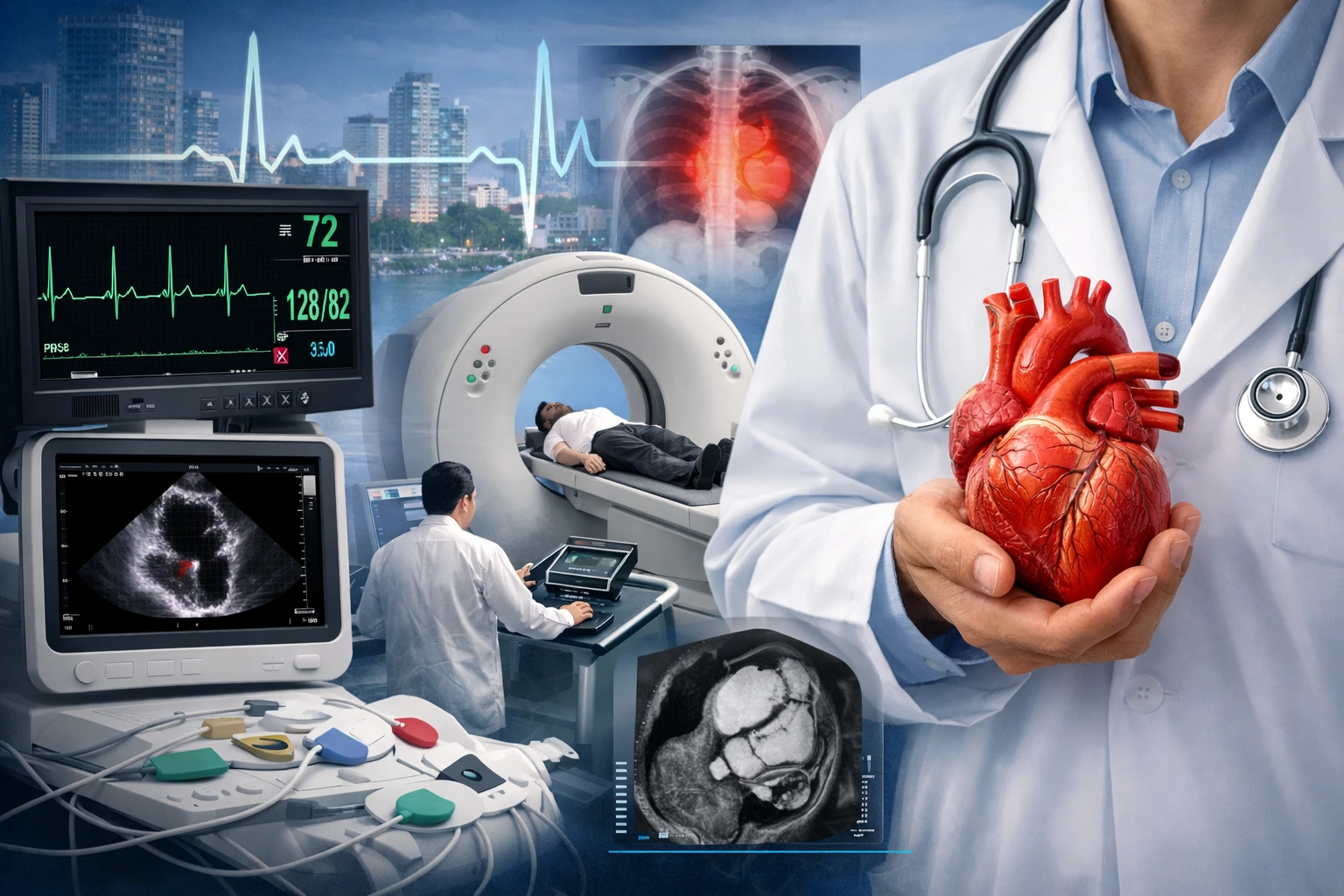
Cardiologist in Girgaon consultations have surged in 2026 — and for good reason. Heart disease remains India’s single largest cause of death, responsible for over 28% of all adult mortalities nationally, according to the Indian Council of Medical Research (ICMR) 2025 Annual Report. In densely populated urban zones like Girgaon, South Mumbai, the combination of high-stress lifestyles, sedentary work patterns, and rising rates of diabetes and hypertension has made cardiac screening an urgent priority for working adults, seniors, and even younger professionals.
Yet many people are still uncertain about which heart tests they actually need — and why. If you have recently been referred to, or are considering seeing a cardiologist in Girgaon for advanced cardiac diagnostics, this guide breaks down the seven most commonly recommended heart tests, what each one detects, and how early diagnosis can be life-saving.
Cardiologist in Girgaon practices are seeing a notable rise in patients aged 30–45 presenting with early-stage cardiovascular risk factors — many with no prior symptoms. According to Jade Cure’s 2026 Mumbai market insights, over 40% of patients who undergo routine cardiac screening at our centre are flagged with at least one previously undetected risk marker, including borderline high blood pressure, elevated LDL cholesterol, or irregular heart rhythms.
The critical challenge with heart disease is its silent progression. Conditions like coronary artery disease, atrial fibrillation, and left ventricular dysfunction can develop over years without any obvious symptoms — until a sudden cardiac event occurs. This is precisely why a cardiologist may recommend proactive diagnostic testing long before you feel unwell.
Mumbai’s urban lifestyle compounds this risk. Long commutes, irregular meal timings, high-sodium diets, air pollution, and occupational stress all contribute to accelerated cardiovascular ageing. For Girgaon residents — many of whom work in finance, trade, and small businesses in the surrounding South Mumbai corridor — the case for annual cardiac screening has never been stronger.
Cardiologist in Girgaon consultations almost universally begin with an Electrocardiogram (ECG) — a quick, non-invasive test that records the electrical activity of the heart. It detects abnormal heart rhythms (arrhythmias), signs of a previous heart attack, conduction defects, and chamber enlargement. An ECG is painless, takes under 10 minutes, and requires no special preparation.
Cardiologist in Girgaon specialists frequently recommend an Echocardiogram when an ECG reveals potential structural abnormalities or when a patient reports unexplained breathlessness, leg swelling, or reduced exercise tolerance. This ultrasound-based test creates real-time images of the heart’s chambers, valves, and pumping function — including ejection fraction, a key indicator of heart failure risk.
Cardiologist in Girgaon practices recommend the Treadmill Test (TMT) — also known as an Exercise Stress Test — to evaluate how the heart responds to physical exertion. As you walk and run at increasing speeds, your ECG, blood pressure, and heart rate are monitored continuously, revealing whether the heart receives adequate blood supply during activity and uncovering exercise-induced arrhythmias that don’t appear at rest.
Cardiologist in Girgaon experts emphasise that a Lipid Profile blood test is one of the most critical — and most overlooked — cardiac risk assessments. It measures total cholesterol, LDL (bad cholesterol), HDL (good cholesterol), and triglycerides, painting a comprehensive picture of arterial plaque risk. According to the Indian Heart Association 2025–26 report, over 53% of urban Indians above age 35 have at least one abnormal lipid value — yet many remain unaware.
Cardiologist in Girgaon physicians increasingly order hs-CRP as part of advanced cardiac risk panels. This blood test measures systemic inflammation — a key driver of atherosclerosis (arterial hardening) — providing predictive value beyond traditional lipid testing. A normal lipid profile does not always mean low cardiac risk. Patients with elevated hs-CRP but normal cholesterol can still face significantly higher risk of heart attack and stroke.
Cardiologist in Girgaon specialists recommend CT Coronary Angiography (CTCA) for patients at intermediate-to-high cardiac risk requiring a detailed, non-invasive look at the coronary arteries. Using advanced multi-slice CT scanning with contrast dye, this test produces high-resolution 3D images of the arterial walls — identifying blockages, plaques, and calcifications not visible on standard tests. It also produces a Coronary Artery Calcium (CAC) score, a powerful predictor of future cardiac events.
At Jade Cure: we provide CT Coronary Angiography using state-of-the-art multi-slice CT technology, with results interpreted by senior radiologists and cardiologists — ensuring accuracy you can trust for critical clinical decisions.
Cardiologist in Girgaon doctors prescribe a Holter Monitor when a patient experiences intermittent palpitations, dizziness, or fainting spells that don’t appear on a standard 10-minute ECG. This wearable device continuously records the heart’s electrical activity over 24 to 48 hours as you go about your normal day — capturing arrhythmias that occur sporadically, including atrial fibrillation, paroxysmal SVT, and dangerous ventricular ectopics.
At Jade Cure, we provide a comprehensive range of cardiac diagnostic services under one roof — from basic ECGs and lipid profiles to advanced CT Coronary Angiography and Holter monitoring — designed specifically for the needs of Mumbai’s urban population. Our Girgaon-accessible centre combines cutting-edge diagnostic technology with a patient-first approach that prioritises comfort, accuracy, and speed.
Our cardiac diagnostics quality framework includes:
Jade Cure’s advanced diagnostic technology ensures that your cardiac reports come with clear clinical context, flagged abnormalities, and — where necessary — a direct channel to consult with our empanelled cardiologists for follow-up guidance.
Cardiologist in Girgaon recommendations for preventive screening have driven growing demand for structured cardiac health packages. Jade Cure offers purpose-built cardiac screening bundles that combine the most clinically important tests into a single, convenient visit:
All packages include a detailed digital report delivered within 24 hours, and a complimentary teleconsultation with a qualified healthcare professional to discuss your results.
2026 Preventive Health Trend: Corporate demand for employee cardiac screening packages has grown 38% in Mumbai over the past 12 months, driven by rising awareness of stress-linked heart disease. (Source: FICCI Healthcare Report, 2026)
A: For early detection, the most important combination is an ECG, Lipid Profile, and hs-CRP. Together these cover electrical function, cholesterol risk, and vascular inflammation — the three primary early indicators of cardiac risk in asymptomatic adults.
A: Adults aged 30–40 with risk factors (family history, diabetes, hypertension, obesity) should get a basic cardiac panel annually. Adults over 40 should have a comprehensive cardiac assessment at least once a year, regardless of symptoms.
A: Yes. CTCA is a non-invasive procedure using low-dose radiation and contrast dye — significantly safer than conventional invasive angiography and well-tolerated by most patients. Your cardiologist will assess suitability based on kidney function and allergy history before recommending it.
A: Yes. Blood-based cardiac tests including Lipid Profile, hs-CRP, HbA1c, and cardiac enzyme panels can be collected at home across Mumbai by certified phlebotomists. Jade Cure offers home sample collection with same-day pickup and next-day digital report delivery.
A: An ECG records the heart’s electrical signals to detect rhythm problems and signs of a previous heart attack. An Echocardiogram uses ultrasound to create live images of the heart’s structure — showing chambers, valves, and pumping function. Both tests are complementary and often recommended together.
A: Yes. Jade Cure provides same-day reports for ECG, Lipid Profile, and most blood-based cardiac panels. Echo and Holter Monitor reports are typically delivered within 24 hours. CTCA reports are provided within 24–48 hours with senior radiologist interpretation.
A: Doctors recommend starting basic cardiac screening — including a Lipid Profile and ECG — from age 25 if you have risk factors like a family history of heart disease, diabetes, or obesity. For those with no risk factors, annual screening from age 35 is widely advised by Indian cardiology guidelines.
A: Not necessarily. A normal ECG means no electrical abnormalities were detected at that moment, but it does not rule out structural problems, blocked arteries, or elevated cholesterol. An ECG should always be considered as one part of a broader cardiac assessment, not a standalone clearance.
A: Seek immediate cardiac evaluation if you experience chest pain or tightness, unexplained breathlessness at rest or on mild exertion, palpitations lasting more than a few minutes, sudden dizziness or fainting, or pain radiating to the arm, jaw, or back. These can be early warning signs of a serious cardiac event.
A: No. The Holter Monitor is a small, lightweight device attached to the chest with adhesive electrode patches. Most patients find it easy to wear during normal daily activities including sleep, work, and light exercise. You are advised to avoid showering or submerging the device in water during the monitoring period.
A: For a TMT, wear comfortable shoes and loose clothing. Avoid eating a heavy meal for at least 3–4 hours before the test. Inform your doctor of any medications you are taking, as some may need to be paused beforehand. Avoid caffeine and smoking on the day of the test for the most accurate results.
A: Regular testing identifies risk early, but prevention also requires lifestyle changes — a heart-healthy diet, regular physical activity, smoking cessation, and stress management. Diagnostic testing and a healthy lifestyle work together: testing gives you the data, and lifestyle changes act on it to reduce your long-term cardiac risk.
Cardiologist in Girgaon referrals and cardiac test recommendations are not something to defer until you feel unwell. The most dangerous aspect of heart disease is how quietly it develops — and how devastating it can be when it finally announces itself. The seven tests in this guide represent the most clinically validated, widely recommended tools for detecting cardiac risk at a stage when intervention is still highly effective.
Whether you are a young professional managing workplace stress, a middle-aged adult with a family history of heart disease, or a senior resident of South Mumbai looking to stay ahead of age-related cardiovascular changes, the right diagnostic tests — interpreted by the right specialists — can make all the difference.
At Jade Cure, we specialize in making world-class cardiac diagnostics accessible, accurate, and affordable for every Mumbai resident. Book your cardiac screening today — because the best time to take care of your heart is before it asks you to. Explore our full range of cardiology diagnostic services at Jade Cure and take the first step toward a healthier heart.