Thyroid Test at Home for Seniors: Complete TSH Screening Guide and Normal Ranges
- Home
- Thyroid Test at Home for Seniors: Complete TSH Screening Guide and Normal Ranges
Connect with us :
+91 911 188 9903
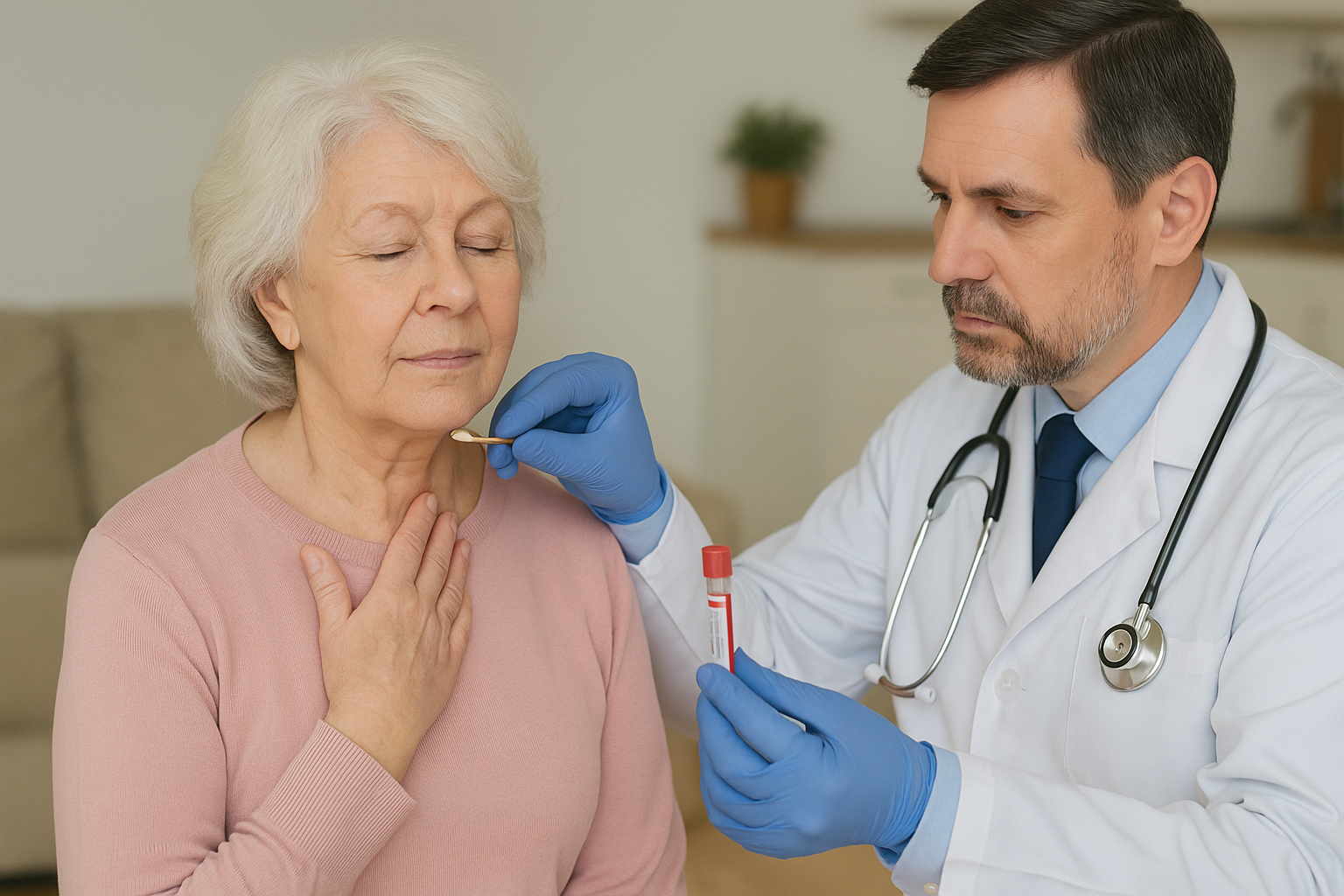
Thyroid test at home for seniors has emerged as a vital diagnostic service addressing the growing prevalence of thyroid disorders affecting 10-12% of India’s population. With hypothyroidism affecting approximately 17.69% of older adults—significantly higher in females—regular thyroid screening becomes essential for maintaining health and quality of life in the golden years. At Jade Cure, we specialize in convenient home sample collection for thyroid testing, bringing laboratory-quality diagnostics directly to seniors who may face mobility challenges or prefer the comfort and safety of home-based healthcare.
Thyroid test at home for seniors eliminates travel barriers while delivering accurate results through NABL-certified laboratories. The thyroid gland regulates metabolism, energy production, heart rate, body temperature, and virtually every cellular process in the body. When thyroid function declines or becomes overactive, seniors experience symptoms often mistaken for normal aging—fatigue, weight changes, cognitive decline, and mood disturbances—making regular screening critical for distinguishing treatable disorders from age-related changes.
Thyroid test at home for seniors addresses the rising tide of thyroid disorders that disproportionately affect older adults, particularly women. Hypothyroidism is more common among elderly individuals due to the increasing incidence and prevalence of autoimmune thyroiditis that occurs with aging. Studies show that approximately 3% of the Indian population has hypothyroidism, with prevalence increasing significantly in the 60+ age group.
The challenge with thyroid disorders in seniors lies in atypical presentations. While younger patients display classic symptoms like anxiety, tremor, heat sensitivity, and palpitations, older adults often present with subtle or completely different manifestations. More than half of elderly patients with hyperthyroidism report two or fewer symptoms, and increasing age is associated with reduced likelihood of presenting classical symptoms except for weight loss and shortness of breath.
At Jade Cure, we’ve observed that undiagnosed thyroid disorders contribute to multiple complications in seniors including cardiovascular disease, cognitive impairment, depression, and functional decline. Regular thyroid screening enables early detection when treatment is most effective, preventing progression to severe hypothyroidism or dangerous hyperthyroid complications like atrial fibrillation, which affects up to 20% of older hyperthyroid patients.
Thyroid test at home for seniors typically includes a comprehensive panel measuring TSH (Thyroid Stimulating Hormone), T3 (Triiodothyronine), and T4 (Thyroxine) levels. TSH serves as the primary screening test because it reflects the pituitary gland’s assessment of thyroid hormone sufficiency—elevated TSH indicates hypothyroidism while suppressed TSH suggests hyperthyroidism. This sensitive marker detects thyroid dysfunction before overt symptoms develop.
A complete thyroid profile includes:
The basic thyroid profile (T3, T4, TSH) costs approximately ₹600 in major cities, with home collection services available from providers like Jade Cure. More comprehensive panels including free hormone levels and antibodies range from ₹800-1,200 depending on the parameters included. Adults over 35 should include thyroid testing during routine health check-ups, with annual screening recommended for seniors.
Thyroid test at home for seniors follows a streamlined process designed for maximum convenience and safety. Home sample collection brings trained phlebotomists to your residence, eliminating the need to travel to diagnostic centers. This service proves particularly valuable for seniors with limited mobility, chronic conditions, or those preferring to avoid exposure to healthcare facility environments.
The home collection process works as follows:
Home sample collection follows strict safety and hygiene protocols with trained phlebotomists using sterile equipment and proper disposal procedures. Jade Cure ensures sample tracking at every step, providing transparency from collection through testing to result delivery. The convenience of home collection encourages regular monitoring compliance, essential for managing chronic thyroid conditions or detecting new problems early.
Thyroid test at home for seniors must be interpreted using age-appropriate reference ranges, as TSH levels naturally increase with advancing age. Research shows age-specific TSH reference ranges for elderly populations: 0.65–5.51 mIU/L for ages 65-70, 0.85–5.89 mIU/L for ages 71-80, and 0.78–6.70 mIU/L for those over 80. The median TSH level and upper limit increase with age, reflecting physiological changes in the hypothalamic-pituitary-thyroid axis.
The French Endocrine Society proposed a novel approach in their 2019 consensus statement—using the formula “patient age divided by 10” to establish the upper limit of normal TSH in patients older than 60. Consequently, for an 80-year-old, the upper limit for TSH would be 8 mIU/L, differing from standard cutoffs used for younger populations. This approach acknowledges potential natural changes in TSH levels with age.
Thyroid test at home for seniors showing mildly elevated TSH (subclinical hypothyroidism) requires careful interpretation. High TSH levels in patients older than 65 may be due to aging and do not necessarily require treatment. Treatment decisions should consider symptoms, cardiovascular status, and degree of TSH elevation rather than applying uniform treatment thresholds across all age groups.
Thyroid test at home for seniors frequently reveals subclinical hypothyroidism—elevated TSH with normal free T4 levels—which represents 93.78% of hypothyroidism cases in older adults. This mild thyroid dysfunction presents a management dilemma because the benefits of treatment in elderly patients remain controversial, particularly when TSH elevation is modest and symptoms are absent.
Treatment recommendations for subclinical hypothyroidism depend on multiple factors:
Subclinical hypothyroidism in seniors may represent normal aging rather than disease requiring intervention. However, monitoring remains important because progression to overt hypothyroidism occurs in approximately 2-5% of cases annually. According to Jade Cure’s experts, understanding TSH interpretation in the context of age, symptoms, and comorbidities is key to appropriate thyroid management in the elderly.
Thyroid test at home for seniors becomes essential when certain symptoms emerge, though presentations in elderly patients often differ from younger adults. Classic hypothyroid symptoms—fatigue, cold intolerance, weight gain, constipation, and depression—may manifest subtly or be attributed to other age-related conditions. In older patients, fatigue, dyspnea, and wheezing occur more commonly, while younger patients display the full spectrum of typical symptoms.
Symptoms warranting thyroid evaluation in seniors include:
Hyperthyroidism in elderly patients often presents with atypical symptoms, primarily cardiovascular manifestations like atrial fibrillation, which occurs in up to 20% of older hyperthyroid patients. Weight loss and shortness of breath are more common than classic symptoms like anxiety or tremor. At Jade Cure, we recommend that seniors experiencing any combination of these symptoms undergo thyroid screening to rule out treatable thyroid dysfunction.
Thyroid test at home for seniors requires minimal preparation, making it accessible for elderly patients with complex medical regimens. The basic thyroid panel (TSH, T3, T4) typically requires no fasting, and patients can eat and drink normally before blood sample collection. However, specific preparation steps optimize result accuracy and clinical utility.
Preparation guidelines include:
Thyroid test at home for seniors taking levothyroxine should have blood drawn before their daily dose to accurately assess baseline thyroid status. Some medications—particularly biotin, corticosteroids, and certain cardiac drugs—can interfere with thyroid testing, making medication disclosure essential for accurate interpretation.
Jade Cure’s phlebotomists provide guidance on proper preparation during booking, ensuring optimal sample quality and result reliability. The minimal preparation requirements make home thyroid testing particularly suitable for elderly patients who may struggle with complex fasting requirements or early morning lab visits.
Thyroid test at home for seniors should follow evidence-based screening intervals balancing early detection benefits against unnecessary testing. Adults over 35 should include thyroid screening during routine health check-ups, with annual testing recommended for seniors, particularly those with risk factors. Individuals already diagnosed with thyroid disorders require more frequent monitoring depending on treatment status and disease stability.
Recommended screening frequencies include:
Seniors with autoimmune conditions like diabetes or rheumatoid arthritis warrant more vigilant thyroid monitoring due to increased thyroid disorder risk. Women face higher prevalence than men, making gender-specific screening recommendations appropriate. At Jade Cure, we provide reminder systems helping seniors maintain recommended screening schedules, ensuring continuous monitoring that catches changes early.
Thyroid test at home for seniors revealing abnormal results requires careful interpretation considering age-specific reference ranges and clinical context. Elevated TSH with normal or low free T4 indicates primary hypothyroidism, while suppressed TSH with elevated free T3/T4 suggests hyperthyroidism. However, the degree of abnormality and presence of symptoms guide treatment decisions, particularly in elderly patients.
Common abnormal patterns and their implications include:
Jade Cure provides detailed reports with age-appropriate reference ranges clearly marked, enabling patients and physicians to identify deviations requiring attention. Abnormal results typically prompt repeat testing to confirm findings, followed by consultation with endocrinologists or primary care physicians for treatment planning. The convenience of home testing facilitates follow-up monitoring, essential for dose titration and treatment effectiveness assessment.
Q: How much does a thyroid test at home cost for seniors?
A: The basic thyroid profile (TSH, T3, T4) with home collection costs approximately ₹600-800 in major Indian cities. Comprehensive panels including free hormones and antibodies range from ₹800-1,200 depending on parameters included.
Q: What is the normal TSH range for a 70-year-old?
A: For individuals aged 71-80, the normal TSH range is 0.85-5.89 mIU/L. The French Endocrine Society suggests using “age/10” as the upper limit, making 7.0 mIU/L the upper normal for a 70-year-old.
Q: Can I eat before a thyroid test?
A: Yes, fasting is not required for basic thyroid testing. You can eat and drink normally before blood collection. However, take thyroid medication AFTER the blood draw, and avoid high-dose biotin for 8 hours before testing.
Q: How long does it take to get thyroid test results?
A: Thyroid test results are typically delivered digitally within 24-48 hours through WhatsApp, email, or mobile app. Some providers offer same-day or next-day results depending on sample collection timing and laboratory processing schedules.
Q: What are signs of thyroid problems in elderly?
A: In seniors, thyroid disorders often present atypically with fatigue, shortness of breath, weight changes, cognitive decline, and cardiovascular symptoms like atrial fibrillation. Classic symptoms like anxiety or tremor are less common in elderly patients.
Q: Should seniors with slightly high TSH be treated?
A: Treatment for subclinical hypothyroidism in seniors depends on TSH level, symptoms, and cardiovascular status. Treatment is recommended when TSH exceeds 10 mIU/L in patients under 70, but mildly elevated TSH in very elderly asymptomatic patients often doesn’t require intervention.